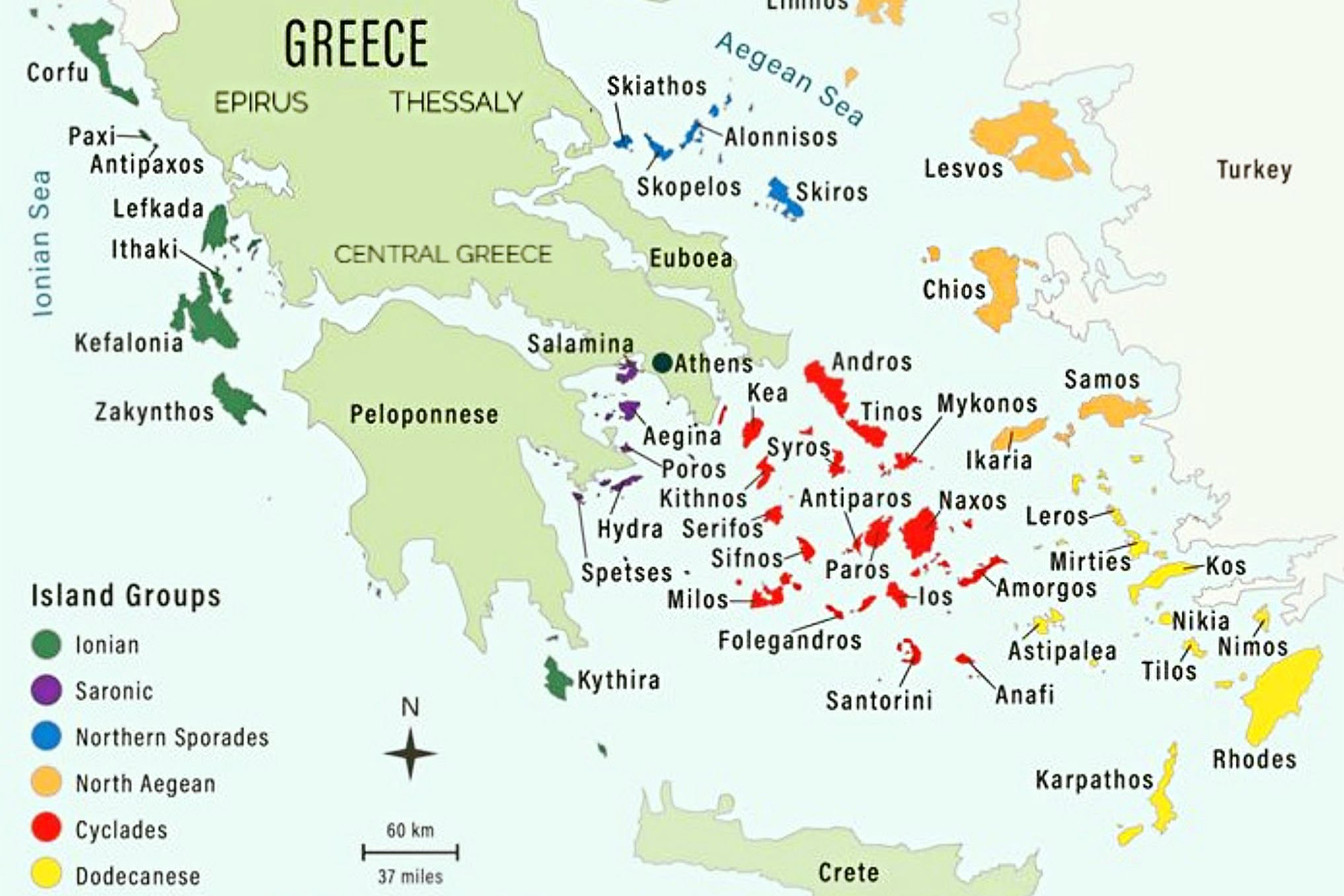
Greece's five sailing areas
Article written by Georges Gritsis, base manager of the Archipel Club yacht charter in Paros.
With five distinct sailing areas, Greece boasts the longest coastline in the Mediterranean Sea thanks to its numerous archipelagos: a total of 13,676 km (8,498 miles). The Greek islands are, in a way, my stomping ground. I learned to sail there as a young child with my parents, and then solo as a teenager. Later, I set off to explore the world’s five oceans, completing a first round-the-world trip, then a second. Yet, I have always returned to my favorite playground: the Greek islands. To everyone preparing to come and sail here, here is some valuable information.
Zooming into the sailing areas
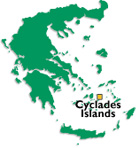
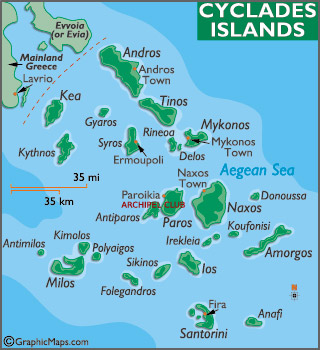
Bounded by the Gulf of Athens (the Argo-Saronic) to the west and the Dodecanese to the east, this acceleration corridor between Greece and Turkey is subject, during the summer, to a strong pressure gradient between the high pressures of Central Europe and the low pressures of Asia. This is the origin of the Meltemi, a northern summer wind. In winter, southern winds predominate, often bringing violent gales!
The Meltemi can reach force 8, although this is rare. Without it, summer heat would become scorching. Thanks to it, the area is not very popular with motorboats. Indeed, the Meltemi kicks up a short, choppy sea that makes navigation very uncomfortable for motor yachts, leaving the waters much more peaceful for sailboats.
In reality, an entire week can pass with a moderate breeze, followed by several days of dead calm. Strong wind episodes typically last 3 to 4 days at most; a competent skipper must know exactly how to anticipate them by monitoring the evolution of pressure systems.
When sailing the Cyclades, it is essential to avoid the traps into which amateur sailors too often fall, as they are unfamiliar with the acceleration zones and map out overly ambitious itineraries. Because the islands are arranged in a circle (hence their name) and the winds blow from the north-east on the western side and from the north-west in the eastern part of the archipelago, it is possible to enjoy a circular navigation, from island to island, almost without ever having to tack!
Ideally, it is best to sail here in spring and autumn if you are not accustomed to Cycladic conditions. On the other hand, with a professional skipper who knows this area inside out, sailing is possible in any season without the fear of remaining stuck in port.
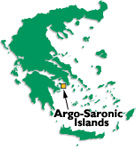
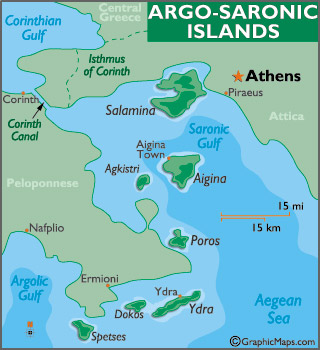
The Argo-Saronic, or Gulf of Athens, has always been considered a cruising paradise: moderate winds, delightful anchorages, and charming little fishing ports set against the backdrop of the Peloponnese's bluish mountains. Over time, the area became busier with modern ferries, and motorboats grew increasingly popular among Athenians living in the nearby metropolis. Fortunately, the listed sites of Poros, Hydra, Spetsai, Nafplio, and Monemvasia (medieval Malvasia) have been preserved and remain today the flagship destinations for a peaceful cruise.
The Meltemi is mostly felt in summer at the eastern mouths of the Gulf, along the Hydra-Monemvasia axis. Further west, the thermal effect comes into play, shifting the wind towards the east and even the south-east in the late afternoon at the head of the gulfs. At night, the trend reverses with land breezes from the west-north-west. Watch out: the arrival of a high-pressure bubble and its strong north-westerly winds in the Ionian Sea can generate violent westerly winds at night on the eastern coasts of the Peloponnese. The most exposed ports are Aegina and Hydra. This influence can be felt as far as the western chain of the Cyclades.
Among the area's main attractions are its proximity to Athens (airport, shipchandlers, sailmakers, workshops, etc.) and the possibility of leaving your boat safely and free of charge at anchor in the roadsteads of Poros or Porto Heli.
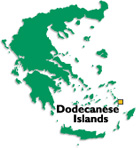
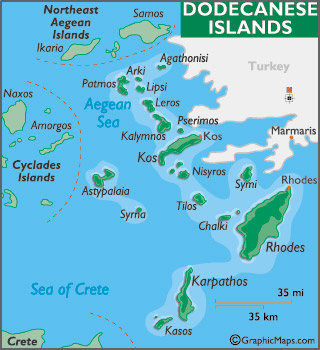
Bounded by a chain of twelve islands along the Turkish coast, the Dodecanese archipelago has long flourished due to its cultural wealth and its proximity to the raw material sources of Anatolia.
The Meltemi blows mainly from the north-west, shifting towards the west in the afternoon near Turkey. The trend reverses at night, shifting towards the north-east. Overall, the thermal effect is most significant near the Turkish coast. Keep in mind that the Meltemi blows very strong to the west of the larger islands, particularly in the Rhodes-Karpathos and Samos-Ikaria (to the north) channels. In spring and autumn, an approaching low-pressure system in the Balkans will trigger south-easterly winds, which tend to accelerate significantly between the islands and the mainland.
When cruising, the main challenge consists in beating upwind from Rhodes to Kos, as the route lies directly in the wind axis. The solution is to sail westward in the morning when the wind is from the north, and favor a northbound tack in the afternoon when the wind shifts to the west. Due to wind shifts caused by the topography, this is not always easy but remains entirely feasible.
The same strategy applies when returning to the Cyclades: sail northwards in the afternoon until you reach Patmos, then, at nightfall, head west as the Meltemi loses its intensity and shifts to the north. By doing so, you will easily reach Mykonos before daybreak. If you choose to sail only by day, the Meltemi will blow increasingly from the west-north-west as the sun rises in the sky; from Patmos, you will barely manage to fetch Amorgos, as the thermal influence of Asia Minor reaches the eastern coast of Naxos in the afternoon!
The main attractions of the Dodecanese are its international airports close to the Turkish coast, its marinas, and its numerous sheltered anchorages. However, keep in mind that under the Schengen Agreement, the Greek islands form an EU border with a non-member country; zigzagging back and forth across this border without proper paperwork is legally impossible. In practice, when you charter a boat from a Greek base, you remain in Greece, and when renting a sailboat from a Turkish base, you remain in Turkey. The only exceptions to the rule are Symi and Kastellorizon in Greece, and Datça in Turkey, where two nights "in transit" are tolerated, though it is best to verify this information before you go.
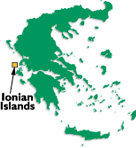
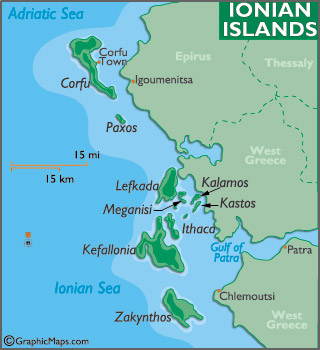
Formed by the group of the "Seven Islands", from Fano (north of Corfu) down to the Strofades in the south, this area encompasses the entire coastline from the Albanian border to the Gulf of Messenia in the southern Peloponnese.
In summer, the region is dominated by a high-pressure system with mainly sea breezes. The weather is hot and humid in the north. There is a specific summer meteorological feature here: the high mountains of Epirus in the north can trigger violent afternoon thunderstorms. Additionally, when low-pressure systems develop in the Gulf of Genoa (associated with the Mistral in the Gulf of Lion), a strong northerly wind of force 6 to 7 can blow for one or two days.
This is the easiest sailing area in Greece, which explains the presence of large charter fleets, especially those offering flotilla sailing. Therefore, do not rely too much on quiet little ports or secluded anchorages. Motorboats are also drawn to the relatively calm conditions of the Ionian Islands.
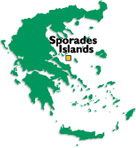
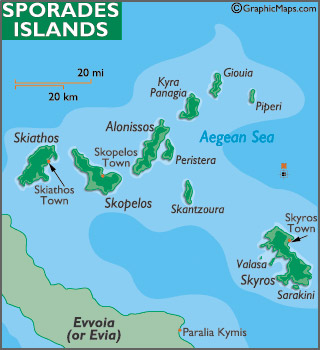
Backed by two spectacular mountain ranges, Euboea and Pelion (the homeland of the Centaurs), the Sporades archipelago is one of the flagship destinations for nautical tourism in Greece. Its waters are quite popular with motorboats, winds are moderate, and temperatures are pleasant. The almost uninhabited island of Kyra Panagia, along with a few neighboring deserted islets, form a natural park and a protected area for monk seals (Monachus monachus). In the summer, the north-northeast Meltemi wind strengthens west of the islands and weakens near the Turkish coast, where it follows notable thermal variations. Thundershowers are possible on calm days. In the spring, fog banks can appear with southerly winds.